As promised, here are some of the best and most traditional poems for a funeral. These are unlikely to offend anybody present; no unsuitable language here, no swear words! Perfect for the average funeral service, especially if the deceased had no particular favourites of their own or weren’t that interested in poetry. These poems offer comfort, hope, and a dignified reflection on loss and remembrance. They can be used in religious or non-religious services depending on the tone desired
“Do Not Stand at My Grave and Weep” by Mary Elizabeth Frye (1932): A classic and widely chosen poem that comforts mourners by expressing that the deceased is not truly gone but present in nature and memory.
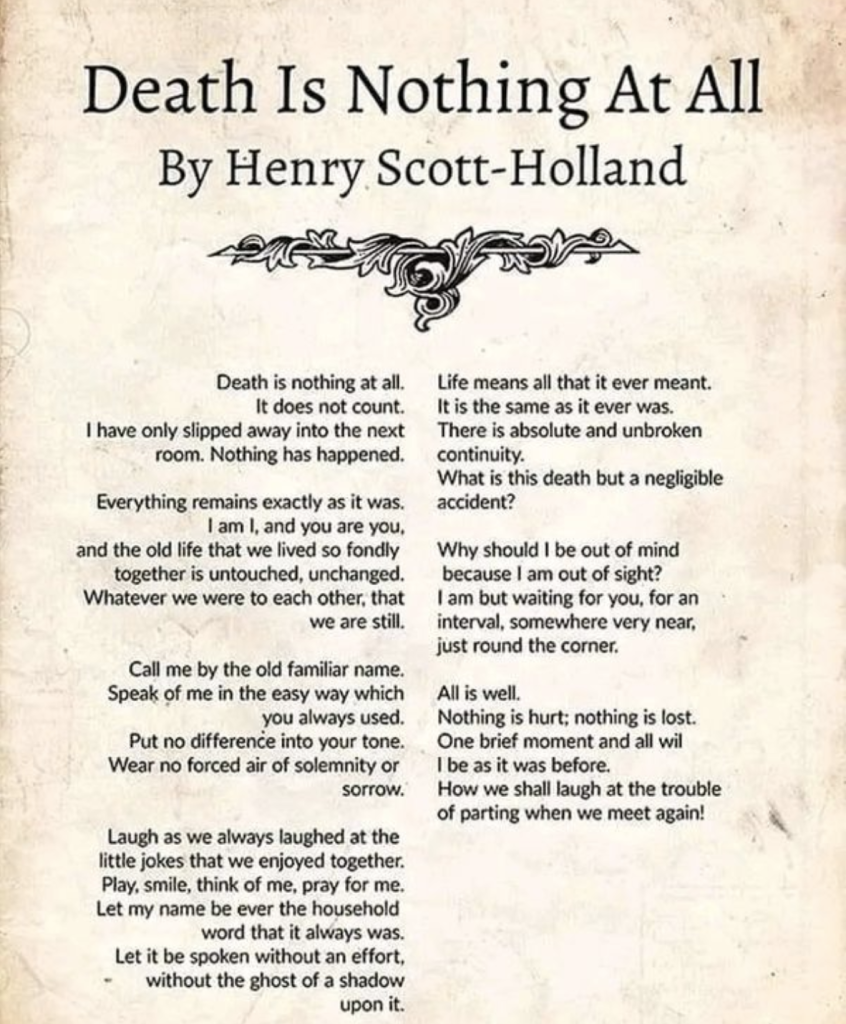
“Death is Nothing at All” by Henry Scott Holland: Emphasizes the continuity of love and presence beyond death, encouraging a light and hopeful perspective on loss.
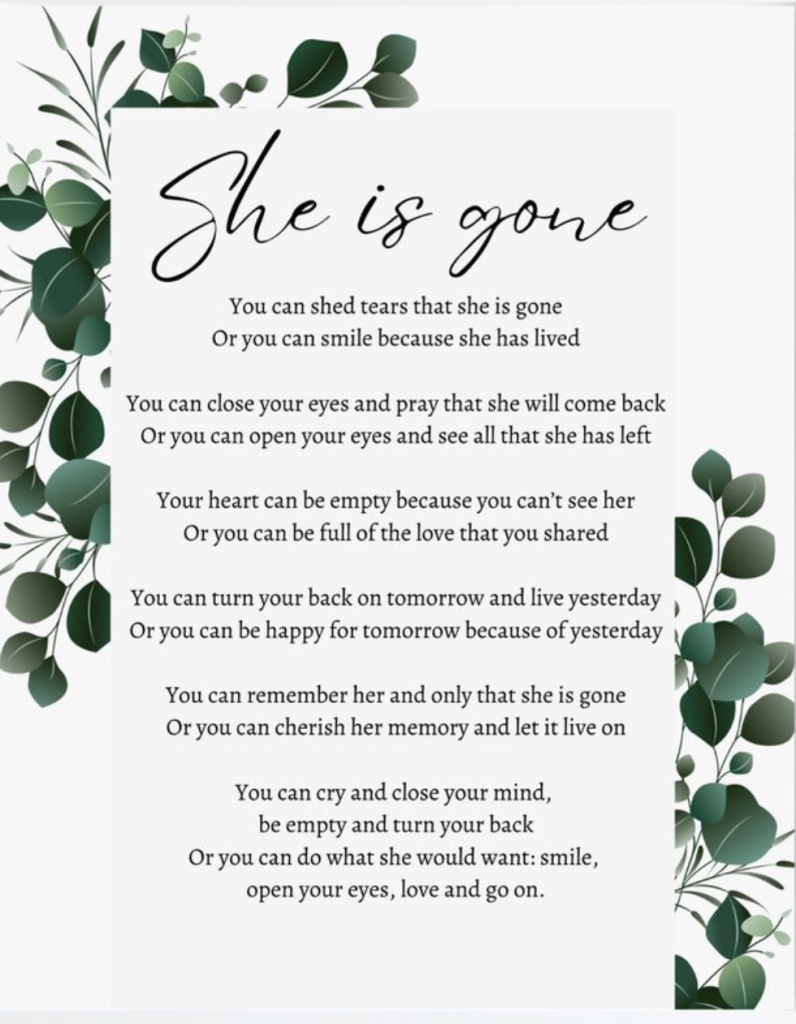
“She Is Gone” (also known as “He Is Gone”) by David Harkins: A popular choice for funerals, offering solace by focusing on the enduring spirit of the departed. You can adapt the pronouns used in the poem making it suitable for male and female.
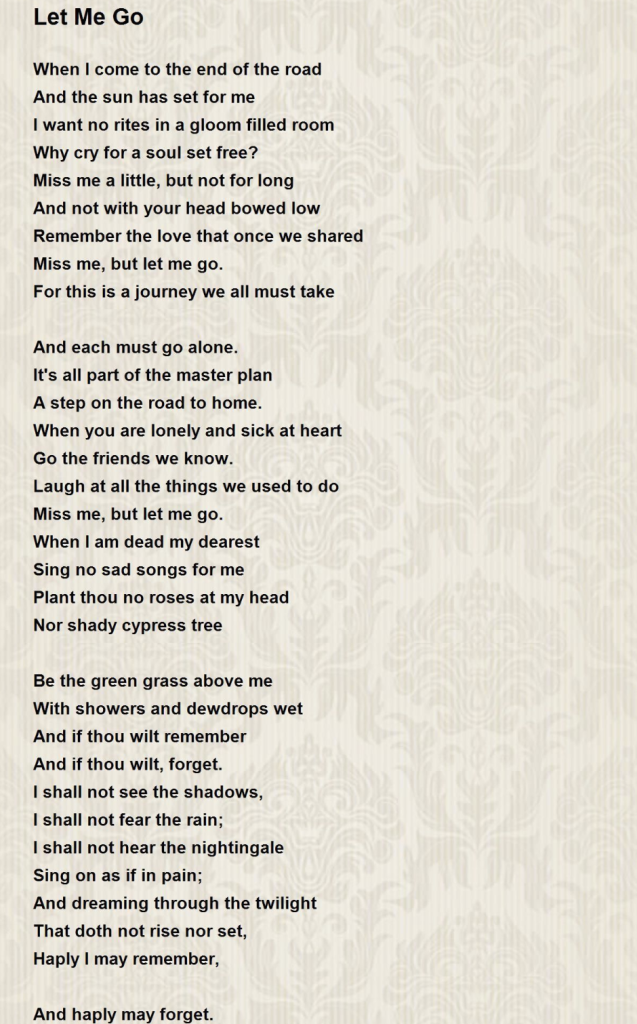
“Let Me Go” by Christina Georgina Rossetti: Encourages acceptance of death as a natural part of life and urges loved ones to cherish memories without prolonged grief.
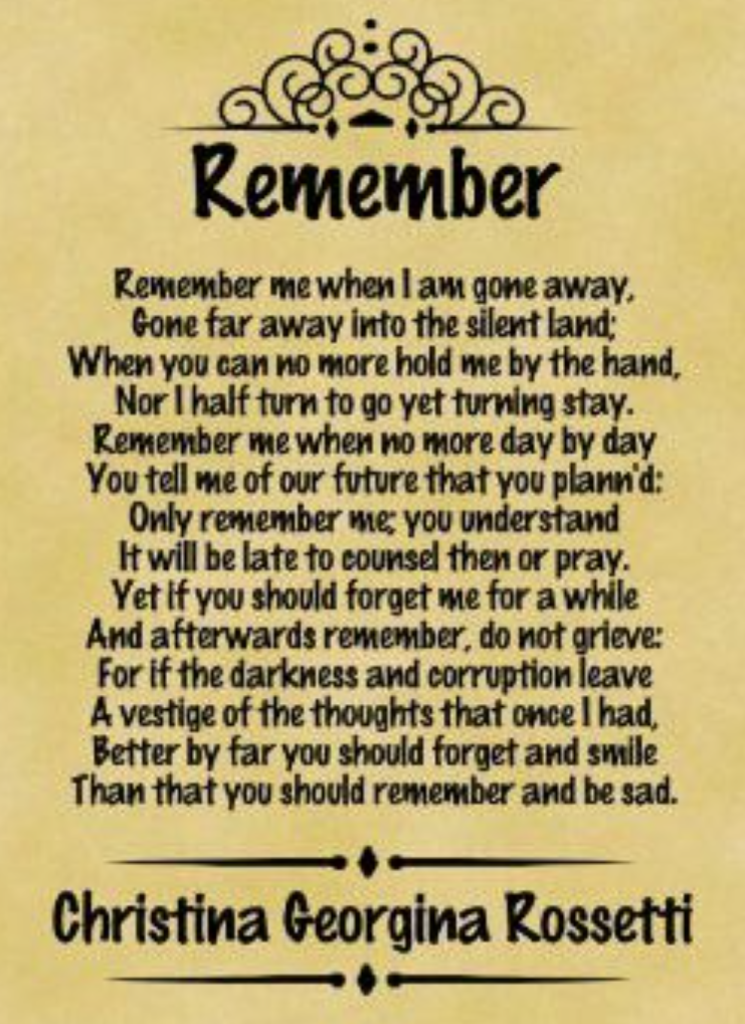
“Remember Me” by Christina Rossetti: Often selected for its gentle reminder to remember the deceased with love rather than sorrow.
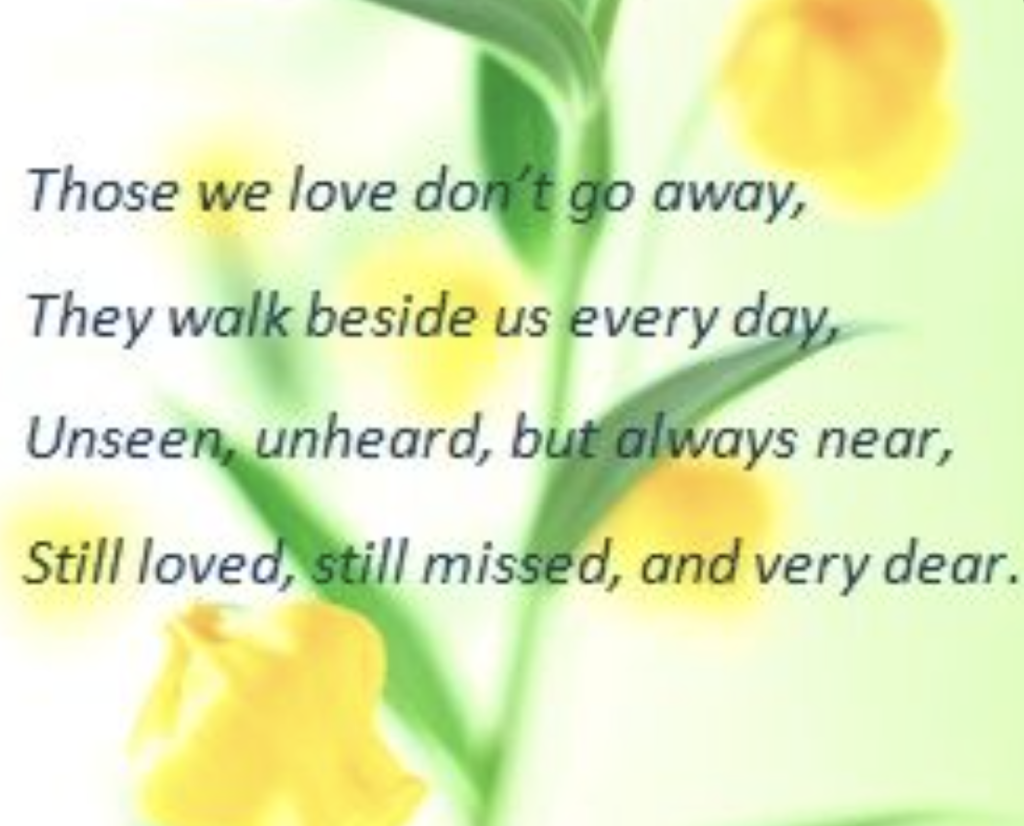
“Those We Love” by Anonymous: A short, impactful poem about the ongoing presence of loved ones in our lives despite their physical absence.
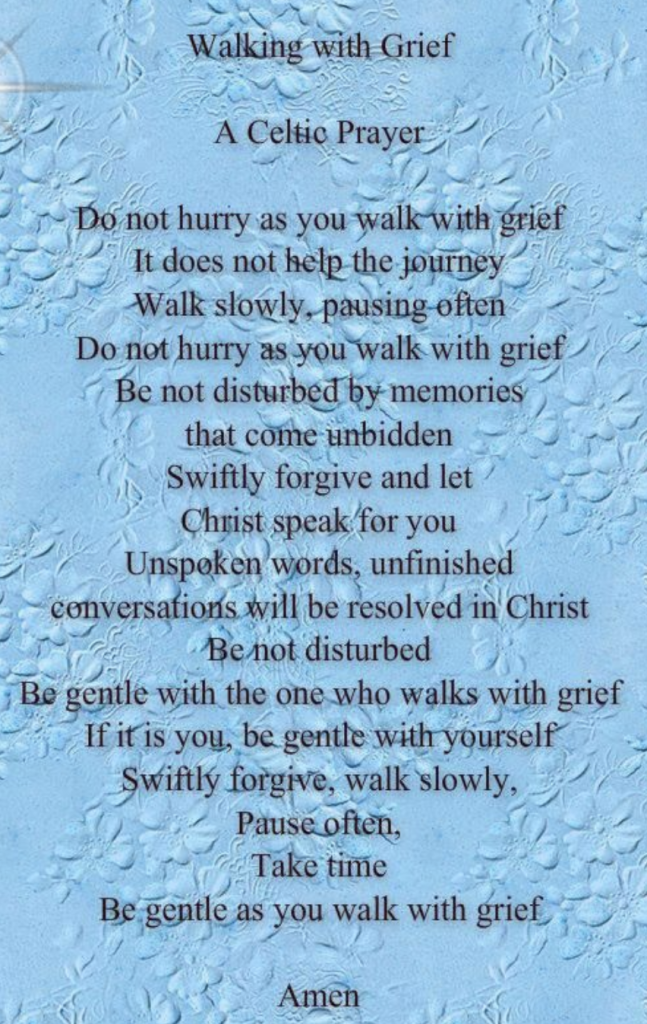
“Walking with Grief” (A Celtic Prayer): A reflective poem that acknowledges the slow, gentle process of grieving and the importance of compassion for oneself and others.